Services / social-freezing

Egg Freezing in Vadodara

Empower your future. We provide a supportive, medical-grade environment for your fertility preservation journey.

Expert-led social freezing Female Fertility Preservation
Egg freezing in Ahmedabad

Egg Freezing (Social Freezing) in Vadodara: Take Control of Your Fertility

Egg freezing gives women the opportunity to preserve their eggs today for the possibility of building a family later. Also known as social freezing, elective egg freezing or oocyte cryopreservation, the procedure allows mature eggs to be collected from the ovaries, frozen using advanced cryopreservation techniques and stored for potential future use.

For women who are not ready for pregnancy because of career plans, education, relationships, personal circumstances or other life decisions, egg freezing in Vadodara can provide greater reproductive choice without forcing an immediate decision about motherhood.

Dr. Yuvraj Singh Jadeja provides personalised counselling and fertility assessment for women considering social freezing in Vadodara, helping them understand their ovarian reserve, age-related fertility considerations, the egg-freezing process and what frozen eggs may realistically offer in the future.

Egg freezing is not a guarantee of pregnancy. It is a fertility preservation option that attempts to preserve eggs at their present biological age for possible use later. The age at which eggs are frozen, the number of mature eggs stored, individual fertility factors and future reproductive circumstances can all influence the eventual outcome.

What Is Egg Freezing and Who Should Consider Social Freezing?

A woman is born with a finite number of eggs. Both the number and biological quality of the remaining eggs generally decline with age. While every woman's reproductive timeline is different, age remains an important factor when considering fertility and future pregnancy.

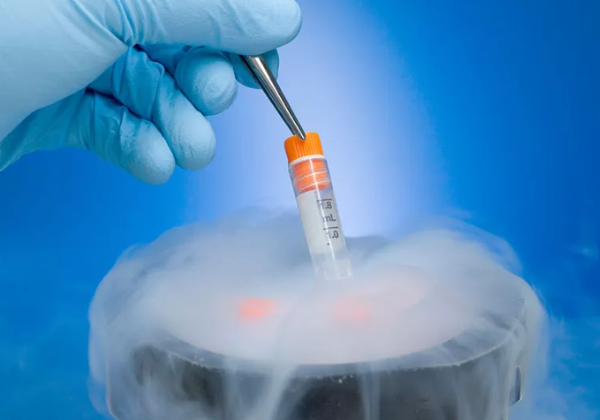
Egg freezing or oocyte cryopreservation involves stimulating the ovaries to develop multiple follicles, retrieving mature eggs and rapidly freezing suitable eggs through a process called vitrification. These eggs can then remain in cryostorage for potential use in future fertility treatment. When egg freezing is chosen for personal rather than medical reasons, it is commonly called social freezing or elective egg freezing.

Why do women choose social egg freezing?

There is no single “right” reason to freeze eggs. Women may consider elective fertility preservation because they:

  • want to focus on education or career development before starting a family;
  • have not yet found the right partner;
  • are not emotionally, financially or personally ready for parenthood;
  • want children eventually but do not want present circumstances to determine their reproductive choices;
  • are concerned about age-related fertility decline;
  • expect to delay pregnancy for several years;

want to understand and preserve available reproductive options while they are younger.

Egg freezing may also be considered for medical fertility preservation in certain circumstances. For example, some medical conditions, ovarian surgery or treatments that may affect ovarian function can make fertility-preservation counselling relevant. Medical egg freezing and social egg freezing have different indications, so the treatment plan should always be individualised.

What is the best age to freeze eggs?

One of the most common questions women ask is, “When should I freeze my eggs?”

There is no universal age that is ideal for every woman. However, egg quality is strongly associated with the age at which the eggs are retrieved. In general, freezing eggs at a younger reproductive age gives the advantage of storing eggs from that stage of life rather than attempting to retrieve them several years later. This does not mean every woman in her twenties or early thirties needs to freeze her eggs. The decision should take into account reproductive goals, age, medical history, family history, ovarian reserve and how long pregnancy is likely to be delayed.

Women considering egg freezing after 35 can also undergo assessment. However, counselling becomes especially important because the number and quality of eggs available may decline with age. Some women may require more than one stimulation cycle to obtain an appropriate number of mature eggs. The objective of fertility assessment is therefore not to create fear around a particular birthday. It is to provide enough information to make an informed decision about whether fertility preservation makes sense for you.

Social freezing versus medical egg freezing

Although both involve oocyte cryopreservation, their reasons differ.

Social or elective egg freezing is generally chosen because pregnancy is being postponed for personal or social reasons. Medical egg freezing may be considered when a medical condition or proposed treatment could potentially compromise future fertility. Understanding this distinction is important because the urgency, stimulation strategy and overall fertility plan may be different.

How Does the Egg-Freezing Process Work?

  • 01
    Fertility consultation and ovarian reserve assessment
    The first step is a consultation with a fertility specialist. Dr. Yuvraj Singh Jadeja evaluates your reproductive plans, menstrual history, medical history, previous surgeries, medications and relevant family history. Depending on the individual situation, investigations may include: AMH – Anti-Müllerian Hormone Antral Follicle Count (AFC) pelvic or transvaginal ultrasound relevant reproductive hormone tests other investigations when clinically indicated. AMH and AFC are commonly used to assess ovarian reserve and help estimate how the ovaries may respond to stimulation. They should not, however, be interpreted as a direct measurement of egg quality or as a guarantee of future pregnancy. Age remains an important part of the overall assessment.
  • 02
    Ovarian Stimulation
    During a natural menstrual cycle, the ovaries usually develop a limited number of follicles, with typically one dominant follicle proceeding to ovulation. For egg freezing, fertility medications are used to encourage multiple follicles to develop during the same treatment cycle. The ovaries are monitored through ultrasound examinations and, when required, blood tests. This allows the fertility specialist to observe follicular development and adjust medication when necessary. For many women, the stimulation phase lasts approximately 10 to 14 days, although the exact duration varies according to individual ovarian response.
  • 03
    Trigger and egg retrieval
    When the developing follicles reach the appropriate stage, a trigger medication is administered to support final egg maturation. The egg retrieval procedure, also called oocyte retrieval, is then scheduled. Egg retrieval is usually performed under sedation or anaesthesia using ultrasound guidance. A fine needle is used to retrieve follicular fluid containing the eggs from the ovaries. The procedure itself is relatively short, although patients spend additional time at the fertility centre for preparation and recovery. Mild bloating, abdominal discomfort or cramping may occur following ovarian stimulation and retrieval. Recovery varies from person to person, and patients should follow the specific instructions provided by their fertility team.
  • 04
    Identifying mature eggs
    Not every follicle necessarily contains an egg, and not every retrieved egg will be mature enough for freezing. The embryology team evaluates the retrieved oocytes and identifies suitable mature eggs for cryopreservation. This distinction is important because the number of follicles seen during monitoring, the number of eggs retrieved and the number of mature eggs ultimately frozen may all be different.
  • 05
    Vitrification and cryostorage
    Suitable mature eggs are frozen using vitrification, a rapid cryopreservation technique designed to minimise the formation of damaging ice crystals within the egg. The vitrified eggs are then maintained under controlled cryogenic storage conditions until they are required, subject to applicable consent requirements, medical protocols, storage policies and prevailing regulations. This is why egg freezing involves more than simply retrieving eggs. Successful fertility preservation requires coordinated ovarian stimulation, careful egg retrieval, experienced embryology and appropriate long-term cryostorage.

Considering Egg Freezing in Vadodara?

  • If you are thinking about delaying pregnancy and want to understand your fertility-preservation options, a personalized assessment can provide more meaningful information than age or AMH alone.

    Consult Dr. Yuvraj Singh Jadeja for egg freezing in Vadodara to discuss your ovarian reserve, reproductive plans, social freezing, oocyte cryopreservation and the steps involved in preserving mature eggs for possible future use.

    The decision about when or whether to start a family remains yours. Egg freezing can provide an additional option by helping preserve eggs from your current reproductive stage while giving you time to make future family-building decisions.

How Many Eggs Should You Freeze and What Happens When You Want to Use Them?

Women considering social freezing frequently ask:

“How many eggs should I freeze?” There is no single number that guarantees a baby.

The number of mature eggs that may be appropriate to preserve depends on several factors, including:

1- age at the time of egg freezing;

2- ovarian reserve;

3- response to stimulation;

4- number of follicles developed;

5- number of eggs retrieved;

6- number of mature oocytes suitable for vitrification;

7- future reproductive goals;

8- whether one or more children are desired.

A younger woman and an older woman with the same number of frozen eggs should not automatically assume that their future probabilities are identical. This is one reason why age at the time of egg freezing is an important part of counselling.

Will one egg-freezing cycle be enough?

Sometimes one stimulation cycle produces an appropriate number of mature eggs for a woman's individual fertility-preservation plan. In other situations, fewer mature eggs may be obtained than anticipated. Depending on age, ovarian reserve, response to medication and reproductive goals, another stimulation and retrieval cycle may be discussed. This decision should be personalised rather than based on a universal target advertised online.

Does egg freezing guarantee pregnancy?

No. Egg freezing should not be described as an insurance policy or a guarantee of having a baby later.

Several biological steps must occur successfully when frozen eggs are eventually used. A frozen egg must survive warming, be suitable for fertilisation, develop after fertilization and potentially produce an embryo suitable for transfer. Implantation and pregnancy involve additional biological factors. The purpose of elective egg freezing is therefore to preserve an additional reproductive option and not to promise a particular outcome.

What happens when you decide to use your frozen eggs?

When a woman decides she is ready to attempt pregnancy using her cryopreserved eggs, the appropriate stored eggs are warmed under controlled laboratory conditions. The eggs that survive warming and are considered suitable may then undergo fertilisation as part of fertility treatment. Because a previously frozen egg must be fertilised after warming, an assisted reproductive technique such as ICSI (intracytoplasmic sperm injection) may be used depending on the clinical and laboratory situation. After fertilisation, embryos are monitored as they develop in the embryology laboratory.

A suitable embryo may subsequently be transferred into the uterus as part of an embryo transfer cycle. Additional embryos, where available and clinically appropriate, may be managed according to the treatment plan and applicable regulations.

This complete pathway is important to understand:

Egg stimulation → egg retrieval → mature egg selection → vitrification → cryostorage → warming → fertilisation → embryo development → embryo transfer.

Egg freezing preserves eggs. It does not freeze a future pregnancy in time.

Does egg freezing affect natural fertility?

The purpose of ovarian stimulation is to recruit follicles available during that treatment cycle. Undergoing egg freezing does not mean a woman must use her frozen eggs in the future. Some women later conceive naturally and never need to use the eggs they stored. Others may return to use them as part of fertility treatment. Your future fertility will continue to be influenced by your age, reproductive health and other individual factors irrespective of whether eggs have previously been frozen.

Can I freeze eggs after 35?

Yes, women over 35 may be evaluated for egg freezing.

However, egg freezing after 35 requires particularly realistic and individualised counselling. Age-related changes in egg quality and ovarian reserve may mean fewer mature eggs are retrieved or that multiple cycles need to be considered. Rather than deciding based solely on age, an assessment of ovarian reserve and reproductive goals can help determine whether proceeding with egg freezing is appropriate.

How your journey
unfolds with us

A clear, step-by-step process so you always know what to expect — no surprises, no pressure.

01

Initial Consultation

Meet Dr. Yuvi for a comprehensive first discussion about your history, goals, and the best path forward.

02

Diagnostic Workup

Thorough investigations for both partners including hormonal, ultrasound, and genetic profiling as needed.

03

Personalised Protocol

A tailored treatment plan designed specifically around your diagnosis, age, and family goals.

04

Ongoing Support

Continuous monitoring and emotional support at every cycle, every step, until your goal is achieved.

Still Unsure?

Let's find the right pathway for you

Our patient coordinators are here to listen without judgment and guide you toward the most appropriate care — at no pressure, whatsoever.